Reported by:
Ang Yu Shin Jr2S(2)
Photos courtesy of:
Leong Jing En
~ Dazzling and Inspiring: Top Achievers of Kuen Cheng (Part 2) ~
For many students, the question of what to pursue after secondary school can be an overwhelming one. Whilst some seem to have their futures all planned out from a young age, others find their way through exploration, through challenges and unexpected opportunities.
For Kuen Cheng High School alumna Leong Jing En, her path towards becoming an engineering officer in the Air Force was far from pre-determined. In fact, after completing her SPM, she was unsure what she wanted to pursue.
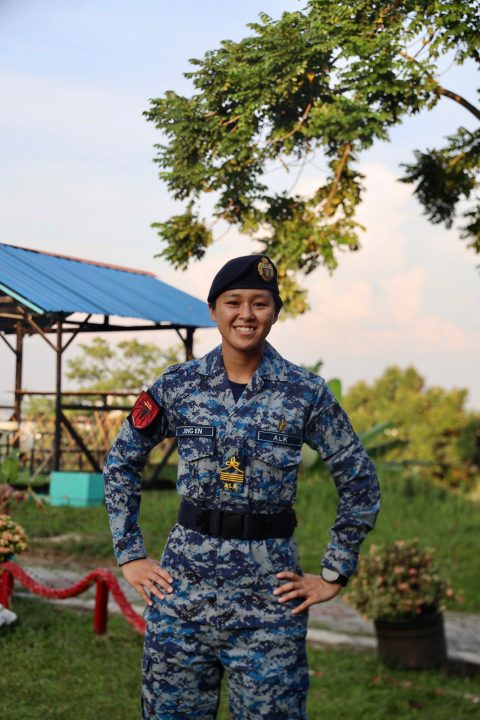
(Photo 1: Kuen Cheng High School alumna Leong Jing En, an Air Force engineering officer)
It was during her time at Kuen Cheng High School in the Police Cadets that she began to think about the possibility of serving the country. However, it was only after graduating that she began to seriously question how she could apply her skills, interests and desire to give back to the country.
The one question that continued to linger in her mind was: Did the country really need people like me to serve in the armed forces?
Learning that the proportion of Malaysian Chinese, the second largest ethnic group, in the country’s armed forces was only a small percentage, she began to see the need for change and that change would have to start with herself.
Rather than pursuing a traditional university route, she began to explore how she could use her interest in engineering combined with her desire to serve the country. At the age of 20, she made the crucial decision to enrol at the National Defence University of Malaysia (UPNM).
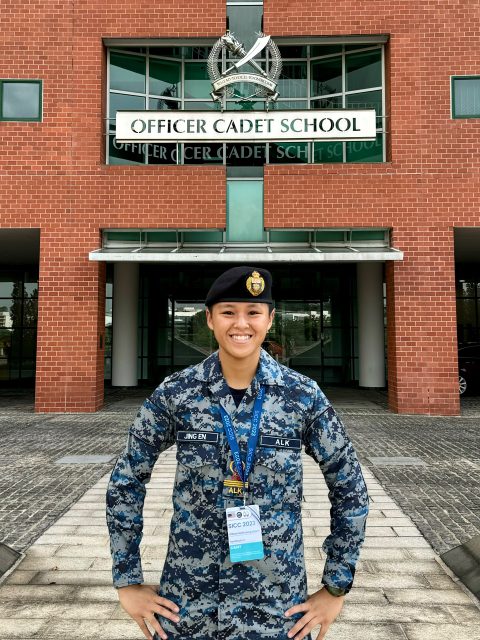
(Photo 2: Jing En standing proud in front of the Officer Cadet School, marking an important chapter in her military journey)
It was a decision that would determine the next chapter of her life.
Five Years of Discipline and Resilience
Her university experience, however, was a vastly different one. Over a span of five years, she would have to combine her studies with military training, physical conditioning and her responsibilities as an officer cadet.
Coming from an independent Chinese secondary school and a traditional Chinese family, she understood that other options, including private universities or studying overseas, could have been seen as the more conventional options. Yet she chose the path that she believed would allow her to grow and serve her country.
Making that choice also meant devoting a large portion of her life to the armed forces.
She described the decision as the starting point of her commitment to serve: once she had made that decision, there was no turning back.
The years that followed were undeniably taxing, but she believes that the challenges were necessary in shaping the disciplined person that she is today.
Perhaps one of her largest challenges was adapting to a completely different environment.
As a Chinese student, she found herself immersed in a highly diverse and multi-racial environment. Language was also a barrier as she was not very confident in Bahasa Melayu.
Instead of letting this isolate her, she made a conscious effort to communicate with her peers and was able to acquaint herself with the language, including the slang lingo that her friends used.
Besides adapting to the all new multi-racial setting, the mindset required in a military environment was also a challenge.
Speed was key: fast movements, thinking and responding to short and direct instructions were all a part of the military culture. She also had to learn that one mistake could negatively impact an entire team, enhancing her sense of responsibility and accountability. The immense pressure also taught her the value of mental resilience.
Her daily routine was a reflection of the regimented lifestyle that she had adopted. Mornings started with parade and training before classes at around 8 a.m. to 5 p.m., which were dedicated to her academic studies, followed by physical activities such as long-distance running and swimming. Evenings saw the dinner parade and preparation time for self-study before the night parade and preparation for the following day’s schedule.
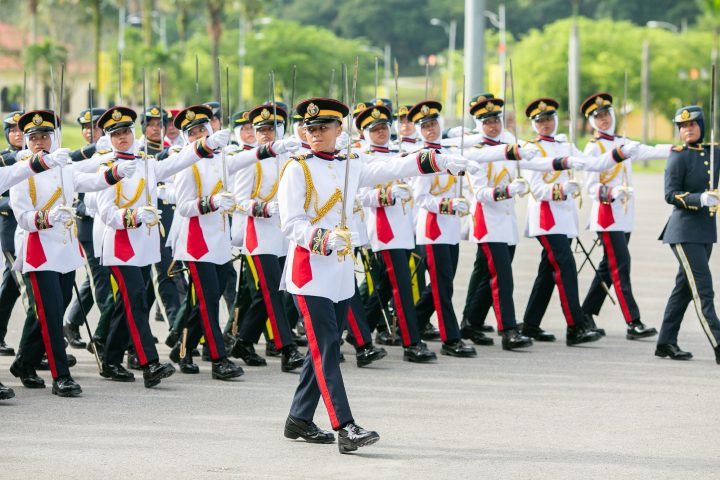
(Photo 3: Jing En participating in a formal march-past parade alongside fellow officer cadets in ceremonial uniform)
Weekends were entirely dedicated to military training, including unarmed combat, military knowledge, obstacle courses and long-distance marching with full equipment.
Balancing academics, military responsibilities and personal life was not easy for her. As cadets further progressed in the ranks, their responsibilities expanded from obeying instructions as juniors to guiding and leading those who followed them.
Self-discipline was not just an expectation but a necessity to cadets. It was not enough to pass the required tests; cadets had to maintain high academic standards while also meeting the physically intense requirements of military training. Maintaining a strict study schedule, physique and motivation became vital for cadets to survive the programme.
After graduating in January of 2025 from UPNM, she was commissioned as a junior Air Force officer in June this year, embarking on her career in aviation engineering.
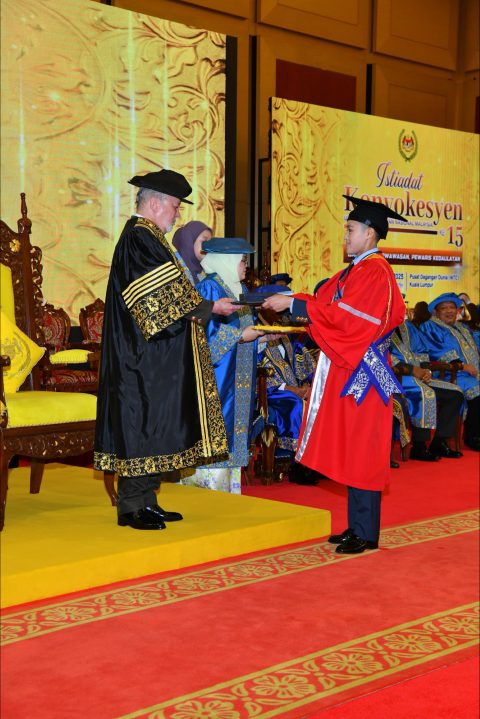
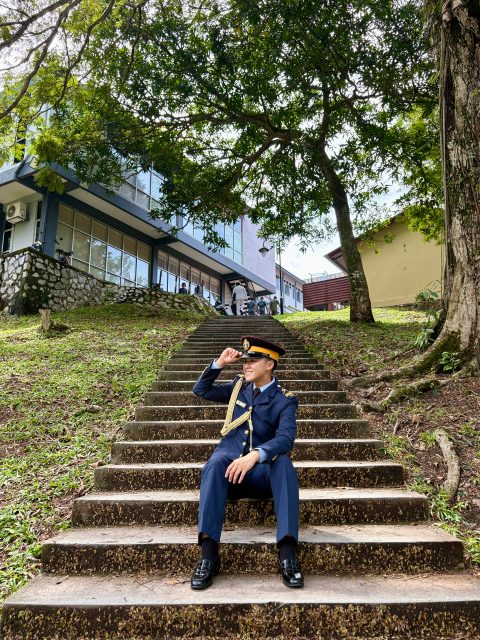
(Photo 4: Jing En at her graduation ceremony, marking the completion of her university and officer-cadet training)
Behind Every Flight: The Backbone of Aviation
For many, the word aviation instantly brings to mind pilots and cabin crew, the people whom passengers interact with during their flight journey. However, according to Jing En, engineering was the “backbone” of aviation. The engineering and maintenance personnel work behind the scenes to ensure that aircraft are safe, serviceable and airworthy before handing them over to the pilots and other operational crews.
Her first real glimpse of this was when she was attached to No. 2 Squadron at Subang Air Base, dealing with all air transport requirements for transporting VIPs, including senior government and military officials.
There, she had the opportunity to observe the work of technicians and engineering officers carrying out deep maintenance on a grounded CN-235 aircraft. Being able to see the aircraft stripped down to its fuselage and internal wiring brought a completely new perspective on the work put in behind every flight, as well as her desire to learn and prepare for future assignments.
“Not all heroes have to be in front; being behind the scenes is also very, very important.”
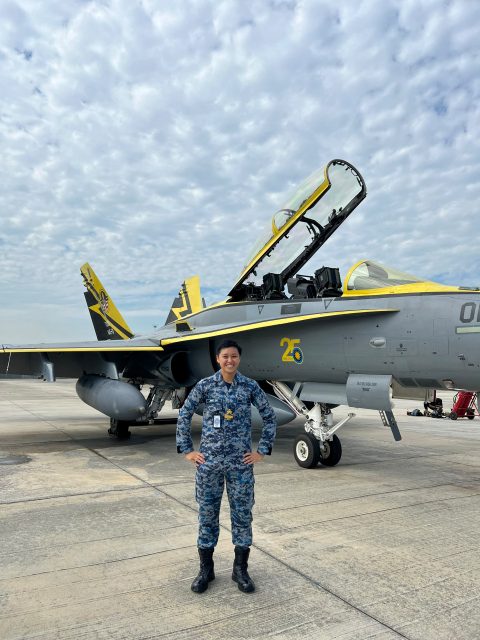
(Photo 5: Jing En standing proudly in front of an aircraft during her journey in aviation engineering)
Never Settle for Less
For Jin En, aviation engineering was a responsibility that extended beyond machinery. Every aircraft carries lives and therefore aviation could not afford to risk or compromise on safety. She believes one guiding principle throughout her aviation experience was: never settle for less.
Unlike many other fields, aviation cannot operate with a “good enough” mindset, it demands excellence. Every component, system and maintenance procedure had to meet the highest standards, for the consequences could be catastrophic if they failed.
This without compromise approach to safety was what made aviation one of the safest forms of transportation. Her role therefore required not only technical knowledge but also sound judgement and the willingness to keep learning.
As an engineering officer, she understood that her decisions could impact the lives of others as well as the organisation. She believed that developing knowledge allowed her to make faster, more informed decisions when facing difficult situations.
For her, being an officer meant carrying a responsibility entrusted to her by the country, and that responsibility required her to prepare, be cautious and continue to learn.
Planning, Preparation and Opportunity
Despite the highly structured nature of military life, she did not see the need for a person to have their entire career mapped out from the beginning. Instead, she believed in combining direction with preparation.
Planning provided a sense of direction, but preparation allowed one to take advantage of any opportunities that were presented. Military personnel could not always control what came next, as they had to align it with organisational needs and requirements. What they could control was their preparedness when an opportunity arose.
Her philosophy was one of continuously improving and qualifying herself so that when an unexpected opportunity came up, she would be ready to utilise it.
For students who are still uncertain about their futures, her experience served as an important reminder: “You need not necessarily know exactly where you are going before you begin moving forward.”
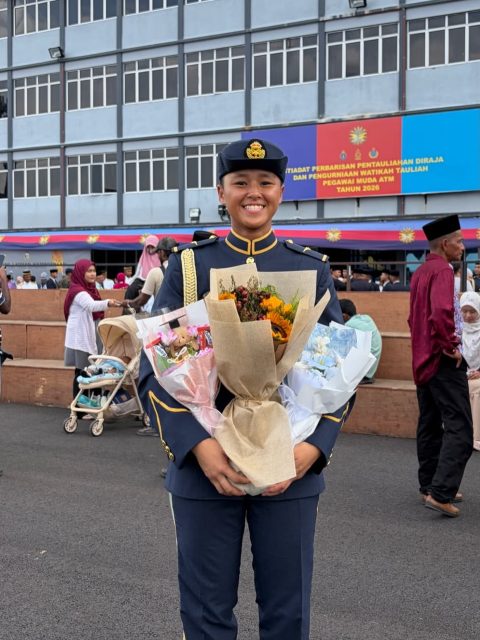
(Photo 6: Jing En reflects on her journey from a Kuen Cheng student to an Air Force engineering officer)
Small steps, consistently taken, could eventually lead to opportunities that were not planned for.
Learning to Lead
Her understanding of leadership had evolved throughout her journey. As a junior cadet, she initially saw leadership as being the person who took on the most work. With experience, however, she learnt that leadership was not about doing everything but doing the right things.
As senior cadets are constantly under the watch of their juniors, leaders had to set the bar with their own actions. For her, leadership therefore began with leading by example: maintaining discipline, not cutting corners and setting the standard that others are expected to follow.
The same spirit extended to teamwork.
Although military life was governed by strict protocols, shared experiences had formed a bond amongst cadets from different services. Experiences such as team-based obstacle competitions had taught her that success was dependent not on one individual, but on the ability of everyone to support each other.
When the Journey Gets Difficult
Her journey was not without its challenges. There were nights, in particularly challenging times, that she questioned her decisions and why she had chosen such a path when her friends were enjoying a more conventional university life.
Yet she did not see these moments of weakness as failures. They were moments for her to remind herself why she had chosen her path.
Her goal had never been to excel academically but to develop discipline, resilience and the opportunity to serve. Remembering that purpose enabled her to move forward when the journey became difficult.
Today, she does not describe her decision as the easiest she could have made, but she is grateful that she pursued it.
Words of Advice
Looking back, perhaps the most important lesson she hoped to share with Kuen Cheng students was that it was okay to not have everything figured out.
Students may encounter setbacks, uncertainty, and times when their efforts do not produce the results they hoped for, but that does not mean their journey is over. They did not define their entire life in one moment.
Jin En reiterated the importance of exploring, asking questions and discovering what they were good at and passionate about. Even if something did not work out, there was always an opportunity to retry, learn and grow stronger.
She also emphasised humility, continuous learning, sincerity and relationships. Taking opportunities and being genuine to others could build a support system that would enable students to get through difficult times. Most importantly, students should not underestimate themselves.
Her own journey was a testament to the fact that a person did not need to have a perfect plan at the beginning. It was more the willingness to continue moving and to grow through every experience that was important.