Reported by:
Yong En Zi Jr2Z(2)
Photography by:
Bock Fhuan Jr2Z(2)
On 12 September 2026, Kuen Cheng High School organised a speech to expand students’ knowledge about nature and wildlife. The event was held on Holistic Learning Day designated on Saturdays, and was specifically arranged for Junior 1 and 2 students.
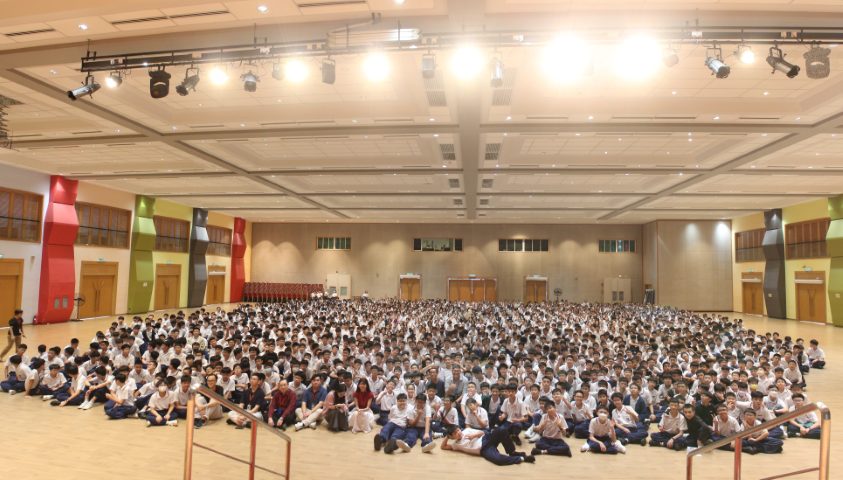
At around 10.25 a.m., students from different classes gathered in the Lee Shin Cheng Hall in an orderly fashion. The atmosphere was one of excitement and anticipation as the students awaited the start of the event. Shortly after everyone settled into their seats, the audience warmly applauded as Mr Goh Yong Chuan, our invited guest, received a token of appreciation from the school.
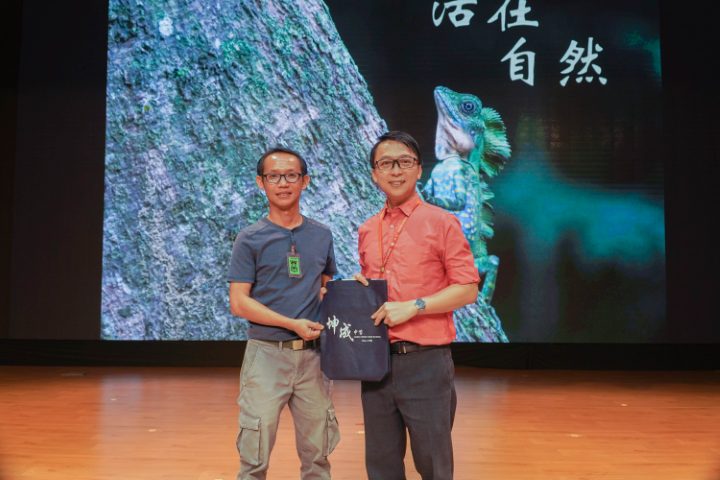
(Photo 1: from left to right: Mr Goh Yong Chuan receiving a gift bag from Vice Principal, Mr Tan Yong Chin)
The event officially began at approximately 10.45 a.m., with Mr Goh promptly introducing his personal background to the audience. Mr Goh, a biologist and nature researcher, has written several books in the past, such as one of his humble pieces titled “the Diversity of Life on Pangkor Island”. His following speech revolved mainly around the topic of diverse Malaysian and Southeast Asian animal species.
“Malaysia is home to four out of thirteen known otter species in the world.” He said, showing pictures of these semiaquatic creatures on the big digital screen, such as the smooth-coated otter and the Asian small-clawed otter.

(Photo 2: Mr Goh enthusiastically sharing his favorite topic about nature)
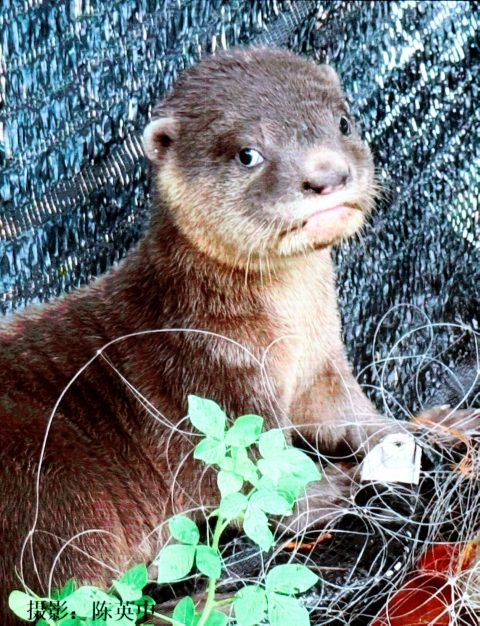
(Photo 3: An Asian small-clawed otter)
Other than that, Mr Goh also mentioned other unique biological species that are present in Malaysia as well. For example, the lar gibbon, also known as the white-handed gibbon, which is native to the rainforests of Peninsular Malaysia.
Additionally, Mr Goh highlighted that Tang Dynasty poet Li Bai had once composed a famous seven-character quatrain, namely the poem “Early Departure from Baidi City,” (早发白帝城) which described his return home from exile down Yangtze River. In this short poem, the line “On both banks the gibbons’ cries are endless” had briefly mentioned gibbon songs being heard while on the poet’s journey down the river.
“However, extinction has become an existential threat to these unique creatures.” Mr Goh said, explaining that these small, tailless primates are currently listed as endangered species on the IUCN Red List due to habitat loss, illegal pet trade and hunting. In the present day, wild gibbon songs can no longer be heard around the place where Li Bai had written his famous short poem.
Following Mr Goh’s elaboration on the gibbons, he then proceeded to introduce the animals in Malaysia that could be seen in daily life. He reminded the audience that nature’s beauty is often observable in ordinary day-to-day life — birds, frogs, snails, and various other types of insects are also a vital part of nature. As the speech was drawing to a close, a group photo of Mr Goh sitting with all the students and teachers was taken to commemorate this event.
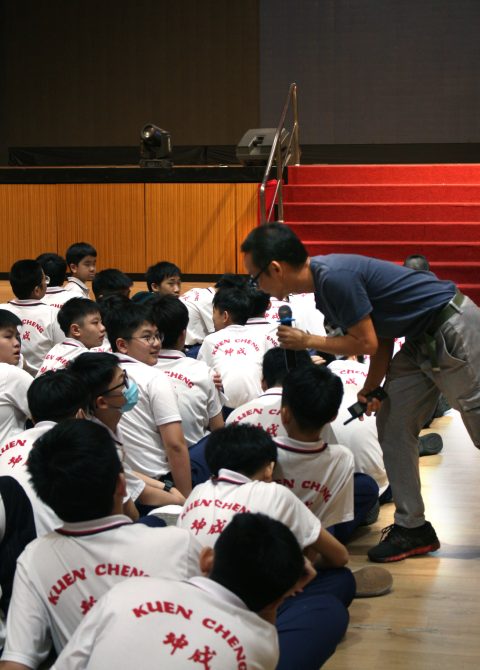
(Photo 4: Mr Goh interacting with students after the event)